ARTICLE · TODD KELSEY
Don’t Delay, No One Can Say (How Soon AI Will Take Jobs Away)
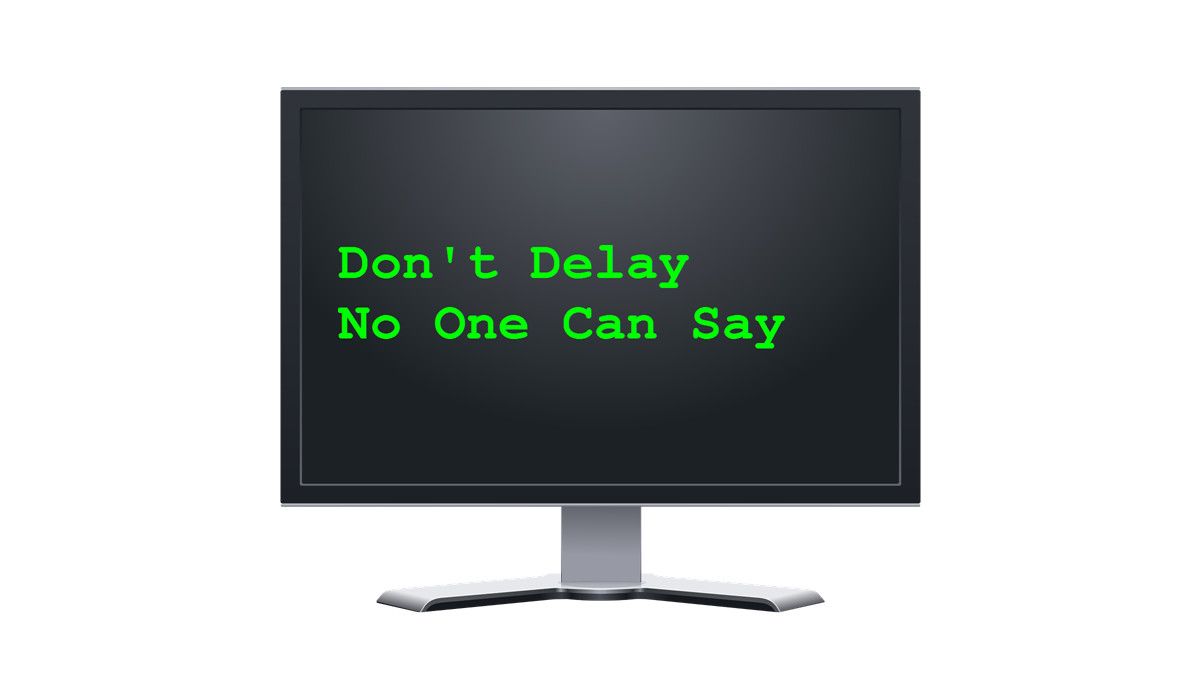
Don’t delay on learning about these issues.
But don’t be alarmed, or intimidated. (I’ll explain why later.)
In order to hopefully get your attention, here are two articles that have influenced my perspective and raised my alertness level about the issue:
- 3.24.17 - Artificial Intelligence is Already Taking Jobs https://www.wired.com/2017/03/hate-break-steve-mnuchin-ais-already-taking-jobs/ Ignore the politics - the data in this article is not just speculation or a single study - it is based on polling 140 experts in automation and artificial intelligence on their perspectives on how it will affect employment. Nutshell: it is coming faster than people think, and it will have a significant impact on the economy. I strongly recommend reading the article, looking at some of the articles it references.
- 3.24.17 - PwC report: 38% of jobs at risk from AI/automation http://money.cnn.com/2017/03/24/technology/robots-jobs-us-workers-uk/index.html Healthcare, education seem ok (emotional intelligence), financial services not so much. This is not alarmism; yes CNN is sensational, but PwC is looking at things dispassionately, and they are a credible, well-established consultancy that has seen a lot of change since their birth in 1849, almost 170 years ago.
So imagine that you’re a busy professor, at the end of a long week, Friday night and it’s bedtime, but you feel like it would probably be a good idea to write something. Now, in other words.
I am going to go out on a limb here and suggest that because of how long it takes for institutional change, that in higher education and elsewhere, there should be no delay in considering how automation will affect the job market. No one can say when, but the following article that I read on January 22, 2017, convinced me to start taking AI and automation a lot more seriously.
- 1.22.17 – Technology vs the Middle Class http://www.wsj.com/articles/technology-vs-the-middle-class-1485107698 (You may or may not be able to access wsj.com; but my recommendation is that the article is worth reading. There is a $12 for 12 week introductory option at present. I’d say definitely worth it.)
Conversely, there are estimates that *1 million* programming jobs will go unfilled by 2020. That’s something to consider too.
In particular I believe the data-based claim that *half of back office jobs could be automated*. And there are serious companies helping large corporations to start doing it - there is a new term called "no-shoring"
What woke me up a little more is the anecdote of *Ivy League* students being used to teach artificial intelligence algorithms and then after a period of time they were no longer needed.
That's Ivy League, folks, the so called bastion of the liberal arts.
They were teaching the AI, and then: goodbye.
This next article made me blink, and I re-read it, and a few items stuck out at me.
- 2.24.17 - A New Kind of Jobs Program for Middle America https://www.wsj.com/articles/a-new-kind-of-jobs-program-for-middle-america-1488114000
- "The difference between someone with a computer-science degree and someone trained to sling code is the difference between an electrical engineer and an electrician, says Eric Wise, founder and chief academic officer of Akron’s Software Guild."
- "As software continues to eat the world, what health care, banking, manufacturing and heavy industry seek are workaday coders who can digitize outdated business processes. Nine out of 10 open coding jobs are outside Silicon Valley, according to jobs site Indeed."
- "People like Mr. Mathis in Ohio illustrate this: His job requires that he create software enabling workers to inspect shipping containers, a process that currently involves a great deal of paper. This doesn’t require a programming wizard: In fact, it benefits from mid-career switchers with nondigital work experience."
So what I get out of the article is the very significant opportunity in coding. What my instincts have been saying is that it would be a good idea for just about anyone, including digital marketers, my people, to at the very least get more familiar with coding, and perhaps consider becoming a coder, at some point. Keep it in the back of your mind. (And if you do become a coder, look me up someday down the road and tell me your journey, and whether you regretted it.)
Don’t Be Alarmed, Or Intimidated
I have a soft spot for anyone who feels intimidated by technology, new things, including students who may feel intimidated by things like Google Adwords, in the same way I used to. I get that same feeling about Artificial Intelligence, AI, but this time, I’m trying to learn from past experience – it’s not as bad as I might imagine. Case in point, the earlier article that talks about there being a need for “Everyday coders”, who aren’t necessarily wizards. Meaning that at some point in your career, you too could be a coder.
For my particular skill area, part of the pursuit of it was born during the Great Recession, where I was looking in Google Trends at most companies going down, but some were going up: Facebook, Twitter, Apple, Google. That helped give me a nudge to write one of the first books on social networking for a general audience. I thought, ok, I’ve worked on projects involving marketing, from the creative and writing side, and I feel a bit intimidated, but I’m going to launch into it. I did, and worked at every level from small to startup to Fortune 50, which you can see in my linkedin profile (and you’re welcome to invite me). Then, because I’ve always wanted to be professor, I also now teach digital marketing.
And in thanks to LinkedIn, one thing that helped me develop the classes I teach now, is the yearly data LinkedIn has been putting out about the top 25 skills to get people hired. Since 2013, the message has consistently included digital marketing towards the very top 25, top 10, top 5, or even first place (social media marketing, 2013). And that would be of any skill to get people hired, including all the software engineering type skills.
I used that data, in short, to write books, develop classes, and help students get interviews and jobs.
But what I’m starting to ask myself, and what I’m suggesting you ask yourself, for the sake of your career, company, institution of higher education, is seriously consider the role that AI and automation are going to have on the economy in the next 5, 10, 15, 20 years.
It’s not a question of if, it’s a question of when, and how much.
I have been citing various articles and things I’ve seen in multiple publications. Yes, everyone has blind spots, but I invite you to review the evidence. Because it’s good journalism, meaning they cite credible sources. Yes, every journalist has a bias, as hard as they try otherwise.
But I’m saying, this is now on my radar, and I highly recommend that you put it on your radar. (And if you want me to come talk about it in a class or at an event, let me know.)
So the problem with me has been, ok it’s on my radar, and I have felt some intimidation. If I had to, how could I learn coding? Maybe I’ll just focus exclusively on digital marketing and hope for the best.
But factory workers in Detroit, MI (where I have friends and family), also focused on what they were used to, they hoped for the best, and they were hammered with massive layoffs and a regional economy nearly destroyed by changes in the marketplace. They were more or less at the mercy of management decisions, in spite of unions, and everyone was caught off guard.
But now, it’s different. If you actually read some of the articles I reference, you’ll come across a semi-industrial worker who transitioned to coding. If they can transition and adapt, so can you. So can I. So can we.
That’s why I am saying, don’t delay in learning about these issues, but don’t be alarmed, and don’t be intimidated.
If you’re like me, there are plenty of reasons to focus, and good ones, on what you are doing at present; for me it’s focusing on the “four staples” of digital marketing: search engine marketing, search engine optimization, social media marketing, Web analytics. These areas have a good chance of being in demand and stable, and possibly even growing, for some time coming, as more money gets spent online.
But . . . .
But, automation is already present in digital marketing, and the kind of leap you start to see forming is quicker than people had thought would happen. Meaning we’re likely to see marketing automation taking over more and more of the “manual” tasks that go with such systems. There’s also evidence of automation in creative work, in terms of iteration and multivariate testing. Even creative work is not necessarily safe.
So . . . .
The moral of the story is to pay attention. Don’t take things for granted, mainly. If your current job has no connection to coding, you might just want to explore a basic free coding class. Many exist.
If you’re in digital marketing, I recommend starting to look further into HTML and Javascript. HTML, and then Javascript, can be a good way to get your feet wet – and both are tightly related to existing digital marketing, at the content level, in the creation of websites, and in the deployment of digital marketing related code.
And consider becoming a coder, at some point. Print this article out, keep it in a place you’ll see it once in awhile, keep your eyes on the news, consider learning more code, depending on how quickly AI takes hold. Or take the image of the TV, print it out, put it on your cubicle, in your office, on the wall. Or ideally, tape it on your laptop.
If you happen to be teaching digital marketing, I highly recommend considering integrating more code into classes, including inviting/challenging students to play with free app development tools like ibuildapp.com, Appy Pie, and others, which allow non-coders to create at the very least, content based, fully functional apps that can be downloaded on android and iOS. If nothing else, it’s a perfect opportunity to integrate mobile. And the side benefit is that students may have so much fun they might want to go a bit further with apps in learning how to code.
So, best wishes in your journey into the future!
And please let me know any thought you have: how you feel, any articles you suggest reading, if you have an opposing point of view. You can comment below or invite me on LinkedIn and communicate directly.